
1 products, shipped nationwide
Floor Flakes
Polymer floor flake for broadcasting into epoxy, polyurea and polyaspartic base coats on garage, shop and commercial floors. Bought by contractors and installers building flake floor systems.
Floor Flakes
1 product · $120.00 to $120.00
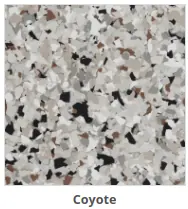
Torginol® Polymer FLAKE
Colored polymer chip broadcast into a wet epoxy base coat to build a flake floor with hiding power and texture.
$120.00
SKU 1355
Chip size, blend and how much flake a floor actually takes
Floor flake is a colored polymer chip broadcast into a wet base coat. It hides the slab, hides base coat inconsistency, adds texture underfoot, and gives the floor its color. Almost every residential garage floor sold today is a flake floor, and the differences between them come down to three choices.
The first is chip size. Larger chips read as a bolder, more stone-like pattern and give more texture. Smaller chips read as a finer, more uniform surface. Size also changes how the floor feels after topcoating, so it is a comfort decision as much as a visual one.
The second is blend. Flake is usually sold as a blend of colors mixed to a recipe, and blends are what let a floor coordinate with walls, cabinets and equipment. Because blends are mixed in production batches, order the entire floor at once. Two batches of nominally the same blend can differ enough to show as a line across a bay.
The third is broadcast rate. A full broadcast to refusal, meaning you keep throwing until the base coat will not accept another chip, uses considerably more flake than a partial broadcast that leaves base color visible. Decide this before you order, because the difference is not small.
Application technique decides how the floor looks. Throw the flake upward so it falls flat rather than pitching it at the slab, work backward toward the door, and wear spiked shoes. Once the base coat has cured, scrape and vacuum the entire floor to knock down chips standing on edge and remove everything loose, then topcoat.
What to check before you order
- Order the entire floor from one batch, since blends vary between production runs
- Decide full or partial broadcast before ordering, since the quantity difference is substantial
- Choose chip size for both the look and the texture you want underfoot
- Confirm the flake is compatible with the base coat chemistry you are using
- Plan spiked shoes, a scraper and a vacuum into the job, since all three are needed between broadcast and topcoat
Floor Flakes: common questions
What is floor flake made of?
Floor flake is a colored polymer chip manufactured specifically to be broadcast into wet resinous floor coatings. It is dimensionally stable, will not bleed color into the resin, and is sold in blends of several colors so the finished floor reads as a coordinated pattern rather than a single tone.
How much flake does a two car garage need?
Flake quantity for a garage depends entirely on the broadcast rate. A full broadcast thrown to refusal, where the base coat takes no more chip and the slab is completely hidden, consumes considerably more flake per square foot than a partial broadcast that leaves base color showing through.
What size flake is best for a garage floor?
Larger floor flake gives a bolder pattern and more texture underfoot, while smaller flake reads finer and more uniform. Garage floors commonly use a mid-size chip as a compromise between hiding the slab and staying comfortable to walk on, but it is a look and feel decision.
Do you have to topcoat a flake floor?
Yes. A flake floor must be topcoated with a clear resin after the excess flake has been scraped and vacuumed off. The topcoat locks the chips down, fills the texture between them, and provides the wear, chemical and UV resistance. Raw broadcast flake with no clear will shed.