
3 products, shipped nationwide
Tints & Pigments
Tints, pigment packs and concrete dyes for coloring floor coatings and staining concrete. Used by contractors mixing solid color body coats, tinting overlays and applying acetone dye to bare or polished slabs.
Tints & Pigments
3 products · $33.95 to $59.95
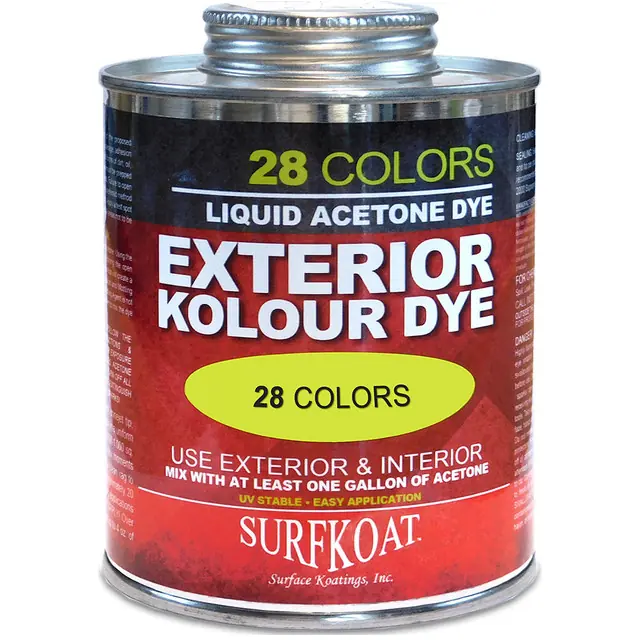
Acetone Exterior Dye
Semi-transparent acetone concrete dye in 15 colors that penetrates for an acid-stain patina without the cure and rinse wait.
$59.95
SKU 1367
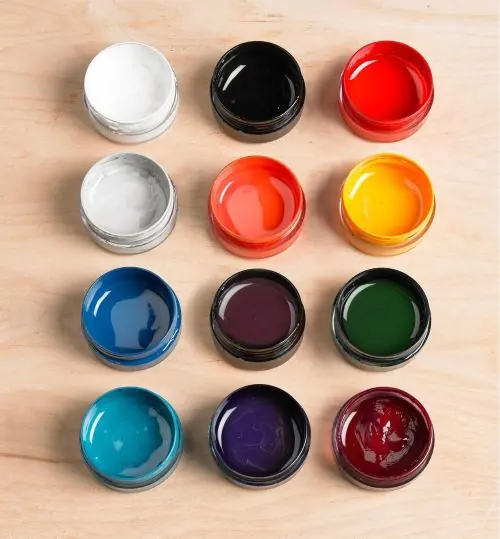
Universal Pigment
Colorant for tinting floor coating resin on site, used for solid color floors and for base coats under a flake broadcast.
$45.95
SKU 1371
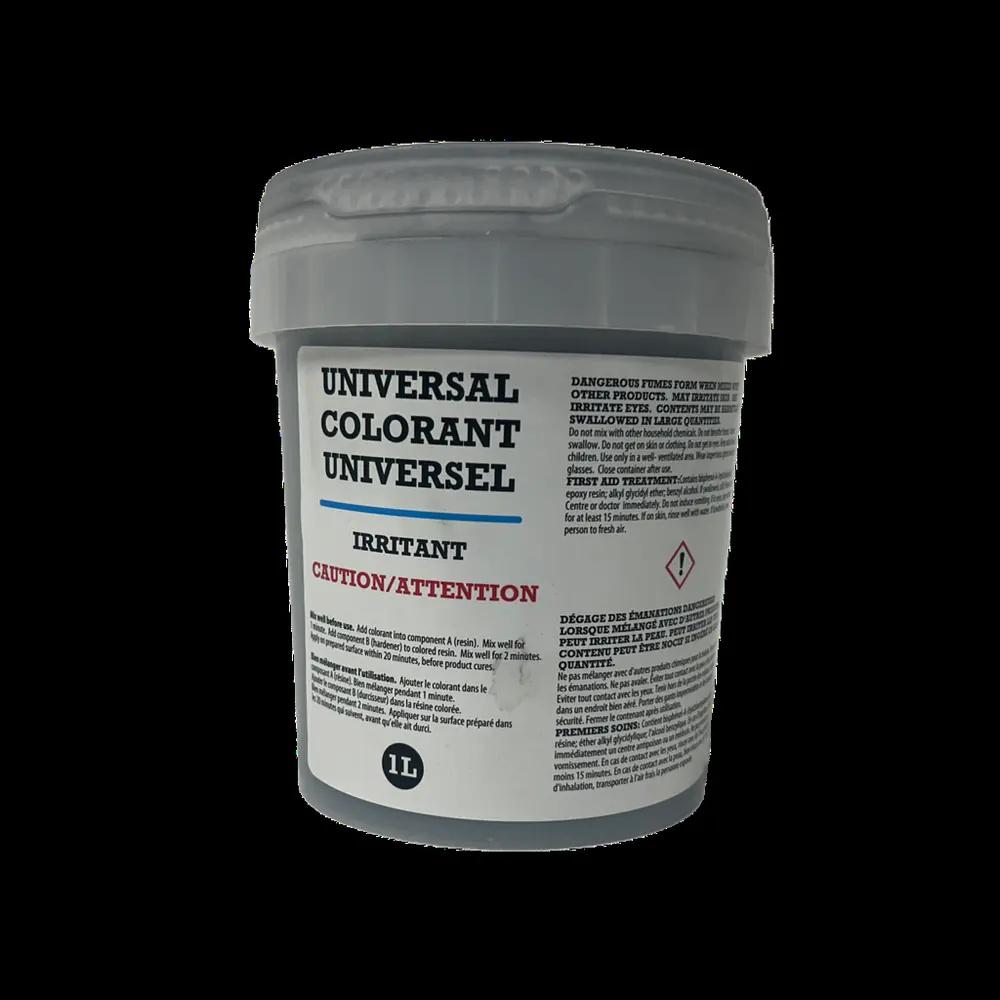
Tex Tuff Universal Pigment Pack
One-liter colored pigment dispersion for tinting 100% solids epoxy, polyurethane, polyaspartic and polyurea floor coating systems on site.
$33.95
SKU 1401
Pigment in the resin versus dye in the concrete
There are two ways to put color on a concrete floor and they are not variations of each other. A pigment goes into the coating, so the color sits in the film. A dye goes into the concrete, so the color sits in the slab and the coating over it stays clear. The look, the process and the failure modes are all different.
Pigment packs are the straightforward path. A measured pack of colorant is mixed into a specific resin to produce a solid color body coat or a tinted overlay. Two things decide whether it works. The first is compatibility, since a pigment formulated for one chemistry can affect cure or gloss in another. The second is mixing. Pigment has to be dispersed completely, and streaks from under-mixing only reveal themselves once the coating has flowed out on the floor, which is far too late.
Acetone dyes work differently. The dye is carried in solvent, penetrates the surface, and the acetone flashes off, leaving color in the concrete. Because it penetrates rather than covers, a dye follows the slab's own variation, which is what people want on a polished or decorative floor and what surprises them on a patchy one. Dye also shows every mark from preparation, so the grind has to be finished before the dye goes down.
Dose rate governs intensity for both. More pigment is not automatically better, since heavy loading can affect the resin's performance. Sample the exact combination of colorant, resin and substrate you plan to use, and get the sample approved before ordering the floor.
What to check before you order
- Confirm whether you need a pigment for the coating or a dye for the concrete, since they solve different problems
- Verify the colorant is approved for the specific resin or substrate you are using
- Check the dose rate and whether it is measured by volume or weight
- Order the full quantity in one batch, since color can vary between production runs
- Make a sample on the actual substrate and get it approved before ordering the job
Tints & Pigments: common questions
What is the difference between a concrete dye and a pigment?
A concrete pigment is mixed into a coating so the color sits in the resin film, giving a uniform solid color. A concrete dye is carried in solvent, penetrates into the slab and leaves color inside the concrete, so the finish follows the slab's natural variation instead of hiding it.
How much pigment do you add to epoxy?
Pigment packs for floor coatings are sold at a set dose relative to the resin volume, and that ratio should be followed rather than adjusted by eye. Overloading pigment can affect cure and gloss, and under-mixing leaves streaks that only become visible after the coating flows out.
How is acetone dye applied to concrete?
Acetone dye is sprayed onto prepared concrete with a solvent rated sprayer, penetrating the surface as the acetone flashes off and leaving color in the slab. Because it penetrates rather than covers, all grinding and preparation must be finished first, since every mark will show through.
Can I tint any floor coating?
Colorants are formulated for specific resin chemistries, so a pigment pack should only be used in a coating the manufacturer has approved it for. Using an unapproved tint can affect cure, gloss and long term color stability, and problems typically show up after the floor is finished.