
2 products, shipped nationwide
Crack Repairs
Crack repair kits and filler resins for sealing cracks and control joints in concrete slabs before a coating is applied. Used by coating contractors preparing garage, shop and warehouse floors.
Crack Repairs
2 products · $150.00 to $162.95
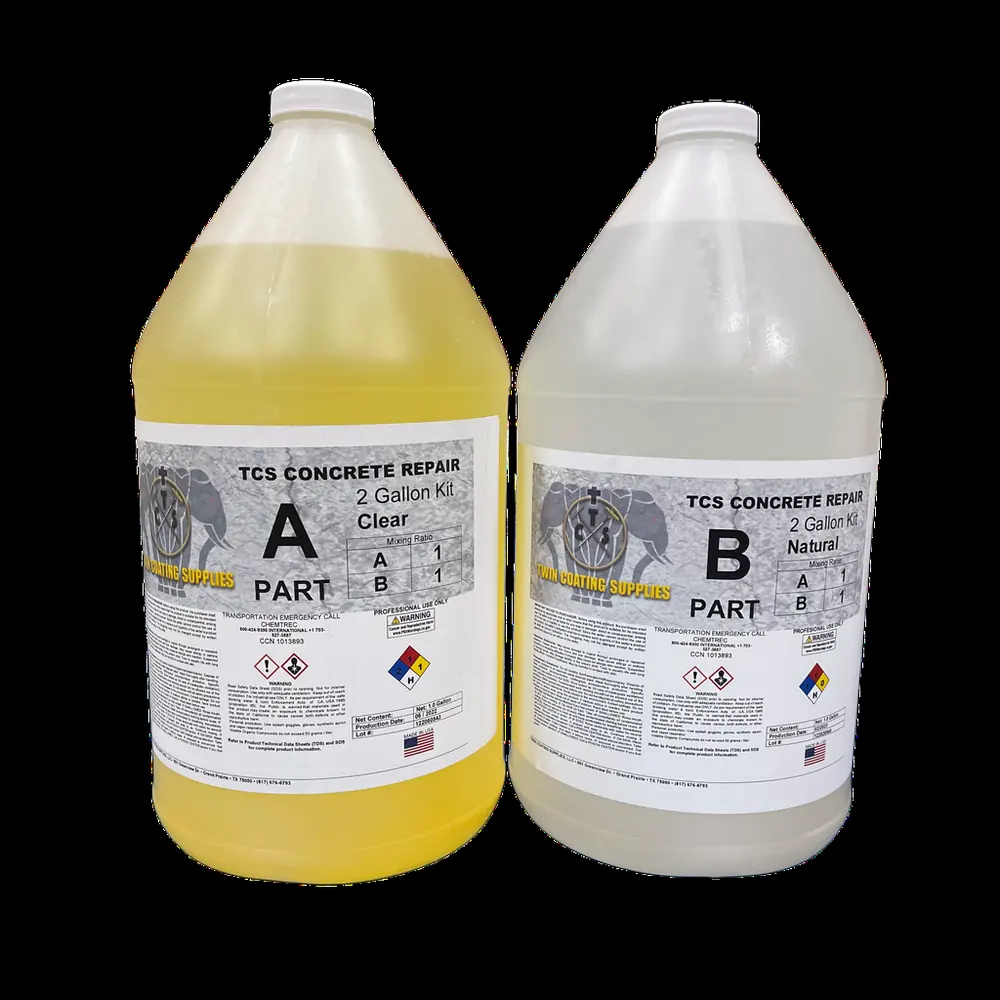
TCS Concrete Repair Kit
Two component low odor polyurethane alloy repair system for concrete and masonry substrates, sold as a 2 gallon kit.
$162.95
SKU 1457
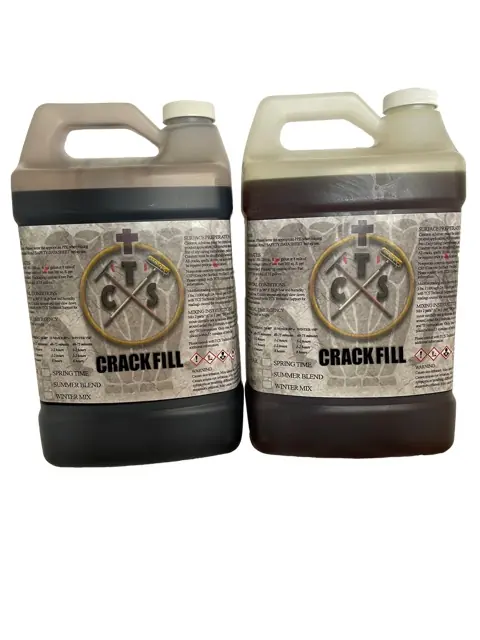
TCS Crack Filler Kit
Fast cure two component crack filler in a 2 gallon kit for filling cracks and joints ahead of a floor coating.
$150.00
SKU 1391
Static cracks, moving cracks and joints
A crack repair on a floor you are about to coat has one job, which is to become part of the slab so the coating passes over it without telegraphing. That means the fill has to be rigid, it has to be flush, and it has to be bonded to sound concrete on both sides.
The sequence that works is consistent. Open the crack so the filler has somewhere to go and something to grip, using a crack chaser or a grinder blade. Vacuum it out completely, since dust in the crack is a bond breaker. Fill slightly proud, let it cure, then grind the repair flush with the surrounding slab so the finished floor stays flat.
The judgment call is whether the crack is moving. A static shrinkage crack filled rigidly disappears under a coating. A live crack, one that is tracking slab movement, will re-open through the fill and through the coating regardless of what you put in it. Control joints fall in the same bucket, and treating a working joint as a crack is how a floor gets a hairline stripe across it in the first year.
Cure time drives the schedule. You cannot grind a repair flush until it has hardened, so pick material with a cure window that fits the shift you have. Confirm the repair material is compatible with the coating going over it before you commit to a floor's worth of repairs.
What to check before you order
- Confirm whether the crack is static or actively moving before choosing a rigid filler
- Check the cure time against when you need to grind the repair flush
- Verify the filler is compatible with the coating system going over it
- Check whether the kit includes sand or aggregate for wider cracks
- Confirm you have a crack chaser or blade to open the crack, plus a vacuum to clean it out
Crack Repairs: common questions
How do you fill a crack in a concrete floor before coating?
Fill a concrete crack by first opening it with a crack chaser or grinder blade, vacuuming out all dust, then pouring in a rigid crack filler slightly proud of the surface. Once cured, grind the repair flush with the slab so the coating passes over it without a ridge.
Why do cracks reappear through an epoxy floor?
Cracks reappear through an epoxy floor when the slab is still moving at that crack. A thin coating film cannot bridge structural or seasonal movement, so the crack simply reopens through it. Static cracks stay hidden once filled rigidly and ground flush, but live cracks need a joint treatment.
Should control joints be filled before coating a floor?
Control joints are working joints, not defects, so they are treated differently from cracks. Some floors have joints filled with a semi-rigid filler and coated over, and others keep the joint honored through the coating. The decision depends on slab movement and the traffic the floor sees.
Do I need to grind crack repairs flush before coating?
Yes. Crack repairs are poured slightly proud and then ground flush so the finished coating stays flat across the floor. A repair left standing above the slab shows as a visible ridge under the coating and wears differently from the surrounding surface.