
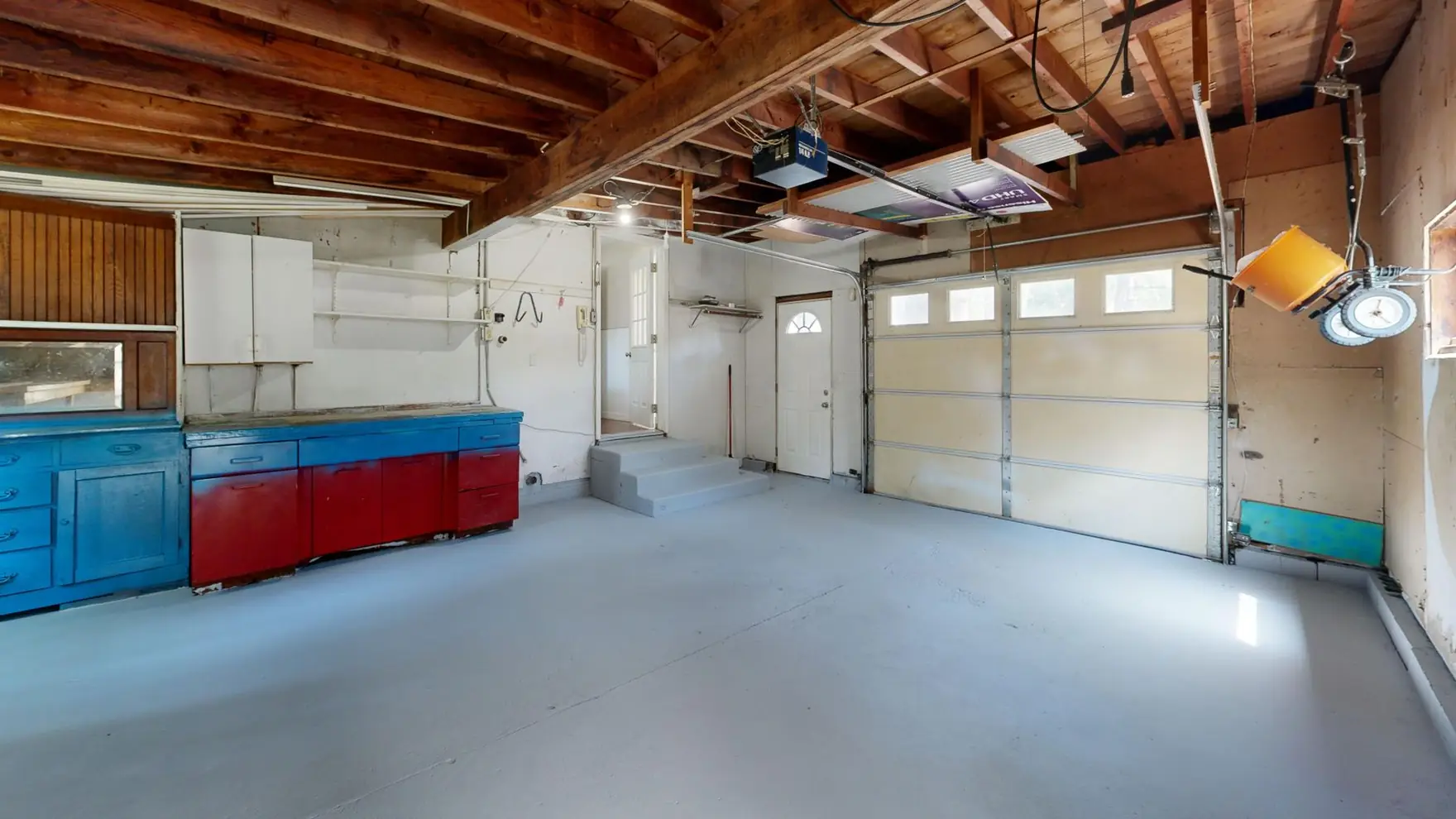
5 products, shipped nationwide
Concrete Cleaning Supplies
Concrete cleaners, degreasers and etching acids for stripping oil, grease and contamination out of a slab before coating. Used by contractors on garage, shop and warehouse floors with a service history.
Concrete Cleaning Supplies
5 products · $9.99 to $420.00
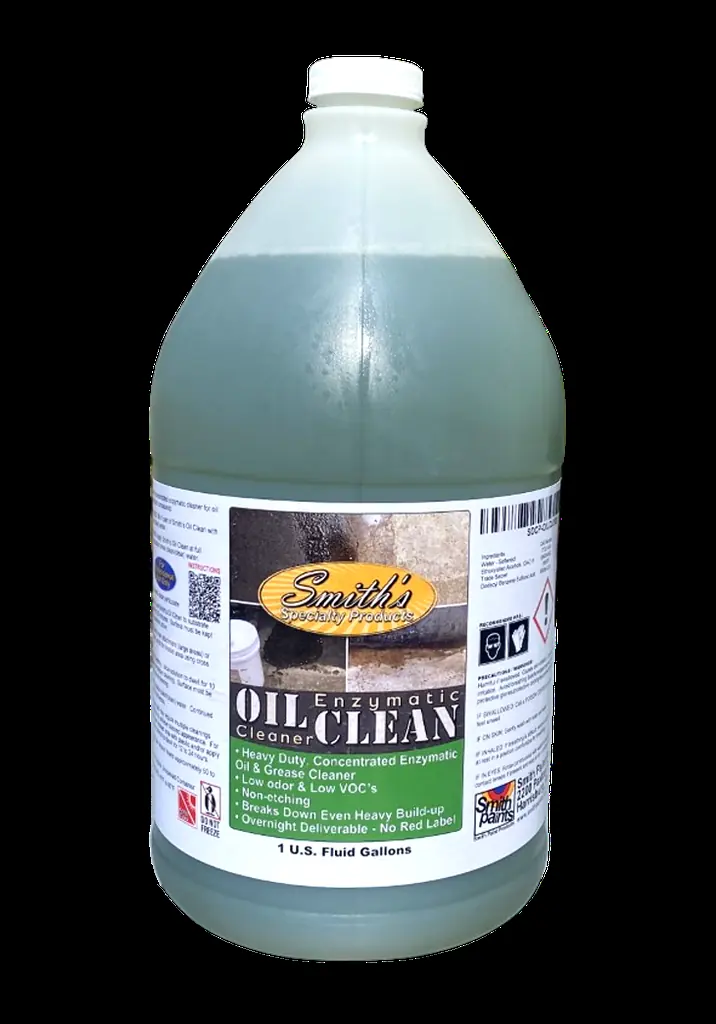
Smith's Oil Clean
Five gallon Smith's Oil Clean for pulling oil contamination out of shop, garage and mechanic bay slabs before coating.
$420.00
SKU 1404
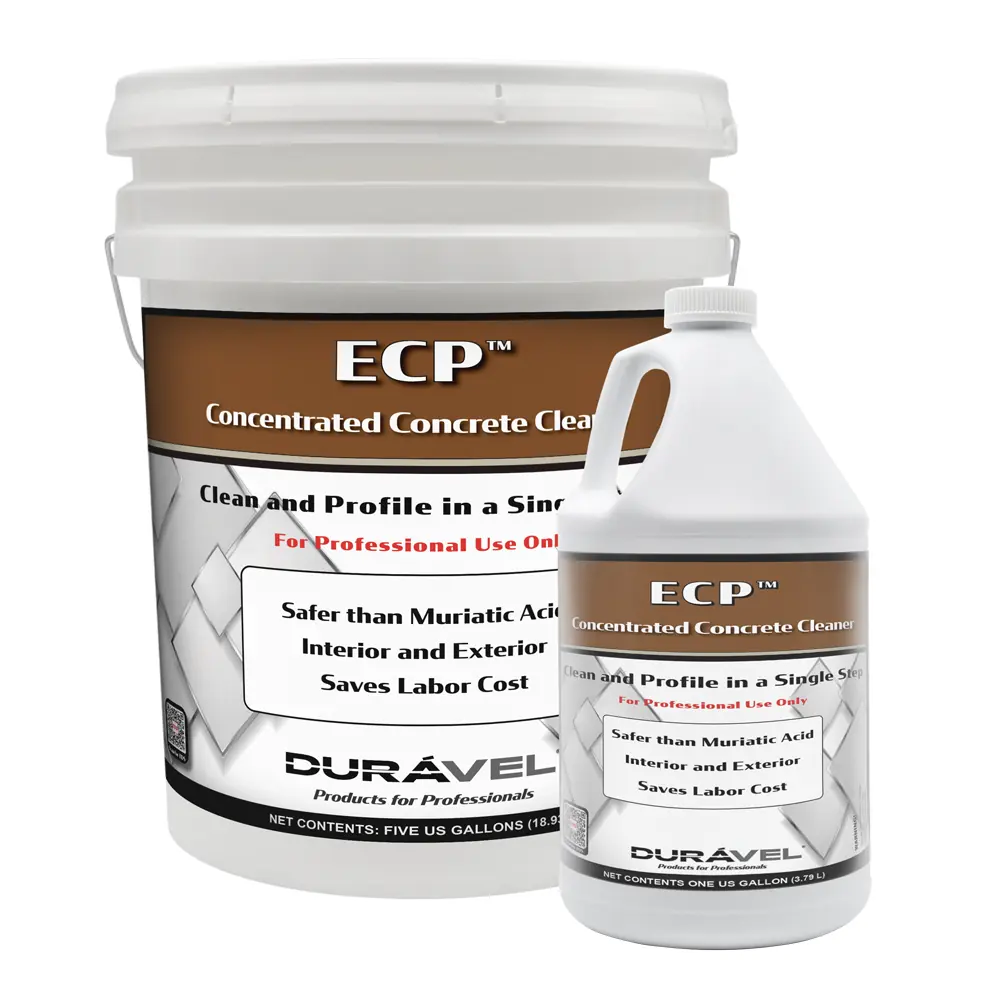
Duravel - ECP Concentrated Cleaner
Concentrated cleaner and concrete profiler that preps slabs for overlays, stains and coatings with no neutralization step required.
$136.38
SKU 1701
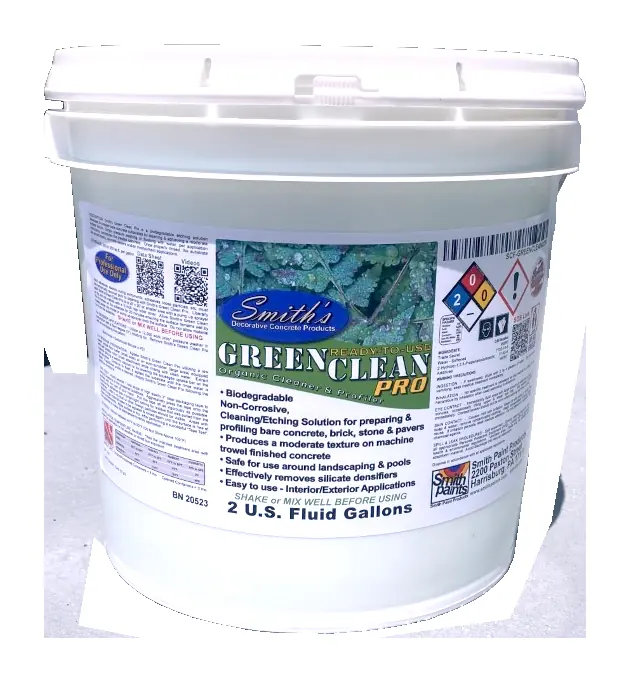
Smith's Green Clean
One gallon of Smith's Green Clean concrete cleaning concentrate for washing a slab before coating prep.
$84.95
SKU 1405
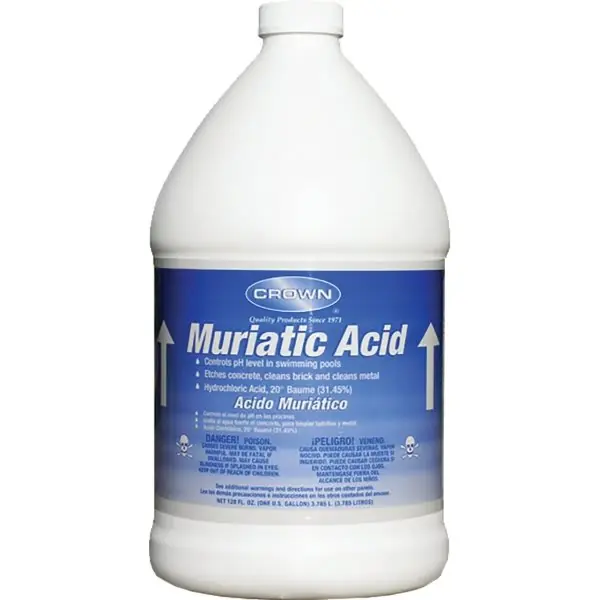
Crown Muriatic Acid
One gallon of Crown muriatic acid for masonry cleaning, efflorescence removal and light concrete etching.
$11.95
SKU 1506
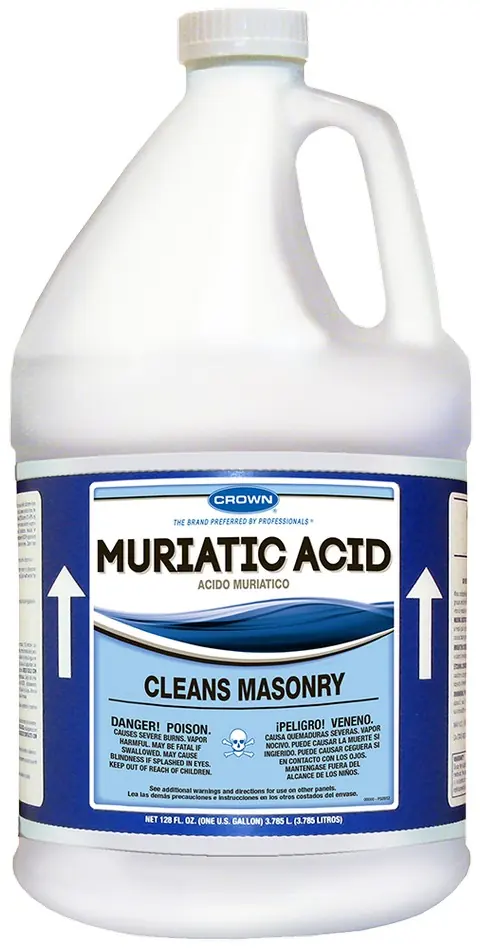
Crown 1gal Muriatic Acid
One gallon of Crown muriatic acid for concrete etching, efflorescence removal, mineral scale and general masonry cleanup.
$9.99
SKU 1689
Degreasing, etching and why cleaning is not preparation
Cleaning removes what is on and in the slab. Preparation opens and profiles the slab. They are two different steps, and confusing them is the most expensive mistake in this part of the job, because a coating that fails on contamination has to come off entirely.
Start by matching the product to the contamination. A general purpose concrete cleaner handles dirt, dust and light soiling. A degreaser is formulated to lift oil and grease out of the pores, which is what a garage or shop floor actually needs. Oil that is left in the slab will show up later as fish eyes, craters or a delaminated patch right where the car parked.
Do the degreasing before you grind, not after. Grinding an oil-soaked slab drives the contamination around and loads the diamonds. Clean first, rinse completely, let the slab dry, then grind.
Muriatic acid and other etchants have real uses, including cleaning masonry, removing efflorescence and etching where grinding is not possible. What acid is not is a shortcut to a coating-ready floor. It profiles inconsistently, it does not touch oil or old coatings, and any residue left behind interferes with adhesion. If you do etch, neutralize and rinse thoroughly, and confirm the slab has dried before coating. Acids demand ventilation, eye protection and chemical resistant gloves, and they should never be mixed with other cleaners.
What to check before you order
- Match the product to the contamination: degreaser for oil, general cleaner for soil, acid for etching and masonry cleaning
- Check whether the cleaner is a concentrate and what dilution ratio it uses
- Confirm the required dwell time and whether the surface can be allowed to dry during it
- Plan the rinse and, for acids, the neutralization step before the product arrives
- Confirm ventilation, eye protection and chemical resistant glove requirements
- Allow drying time in the schedule between cleaning and coating
Concrete Cleaning Supplies: common questions
What is the best way to clean oil off a concrete floor before coating?
Oil is removed from a concrete floor with a dedicated concrete degreaser applied before grinding, allowed to dwell, scrubbed and then rinsed completely. Deeply soaked spots often need a second application. Grinding an oily slab spreads the contamination and loads the diamond tooling instead of removing it.
Should I use muriatic acid on a floor I plan to coat?
Muriatic acid is useful for cleaning masonry and removing efflorescence, but it is a poor substitute for mechanical preparation on a floor you intend to coat. It etches inconsistently, leaves residue that must be neutralized and rinsed, and does nothing about oil or existing coatings.
Do concrete cleaners need to be diluted?
Many professional concrete cleaners and degreasers ship as concentrates and are diluted with water at a ratio set by the manufacturer, with heavier contamination calling for a stronger mix. Follow the label dilution and dwell time, and rinse thoroughly so no cleaner residue is left on the slab.
How long should concrete dry after cleaning before coating?
Concrete needs to be fully dry through the surface layer after washing before any coating goes on, since trapped water blocks adhesion and can cause blistering. Drying time depends on slab porosity, temperature and airflow, so verify with a moisture test rather than by appearance.