
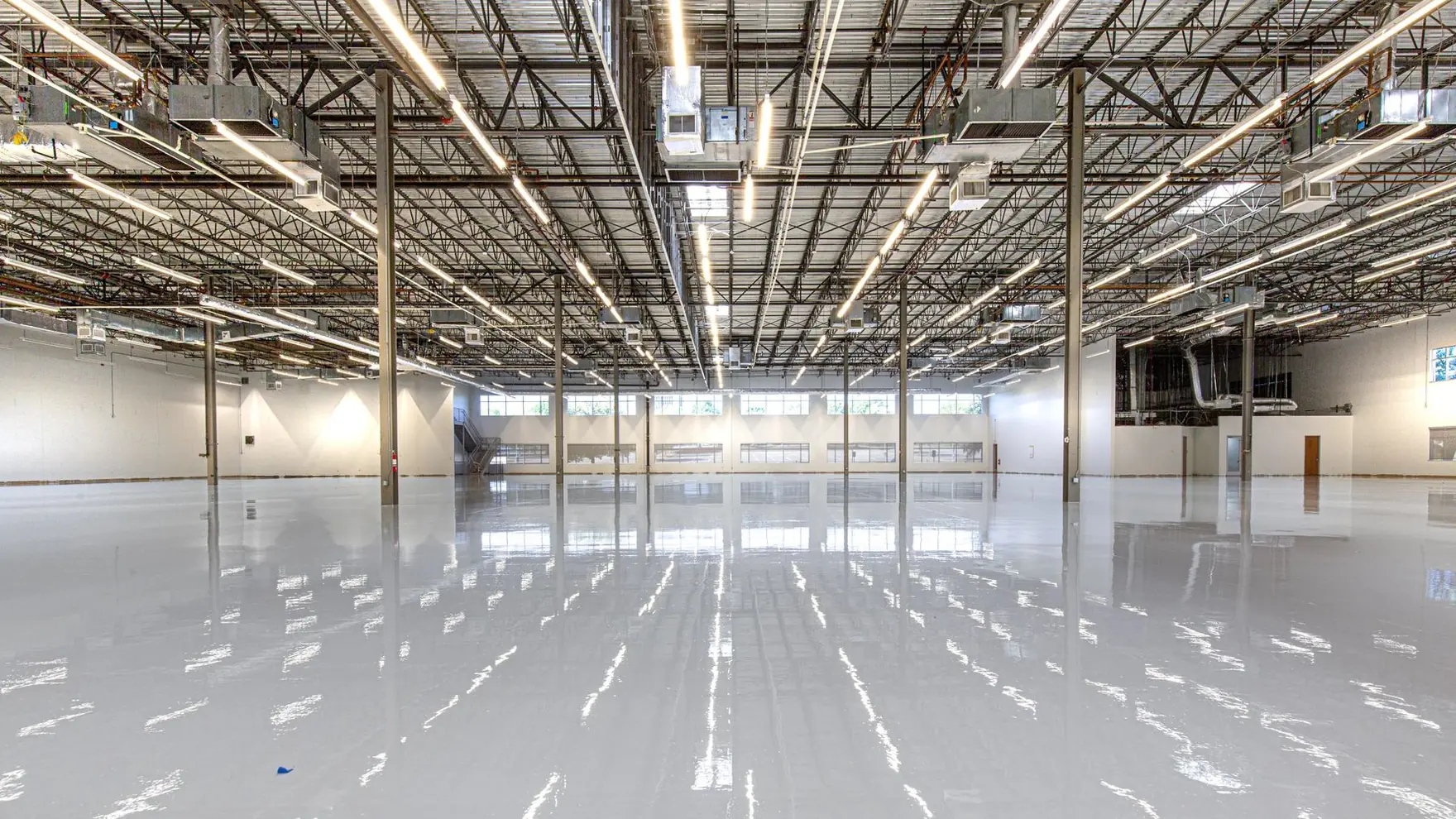
3 products, shipped nationwide
Polyaspartic
Polyaspartic floor coatings for concrete, used as fast curing UV stable clear topcoats and as pigmented single-day systems. Bought by contractors who need a garage or shop floor back in service quickly.
Polyaspartic
3 products · $174.00 to $313.50
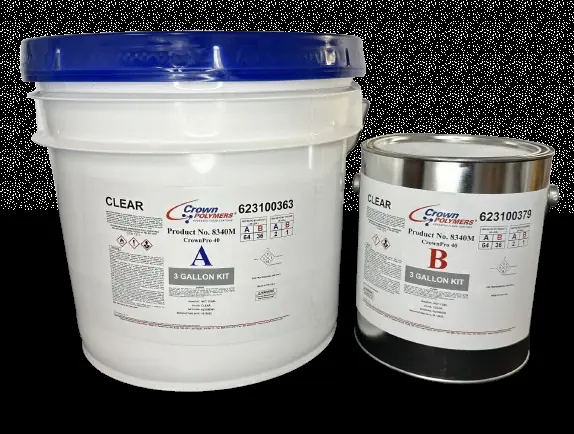
Crown Polymers 8340 Kit
Clear polyaspartic supplied in 3 gallon kits, used in Crown Polymers flake and resinous floor systems.
$313.50
SKU 1580
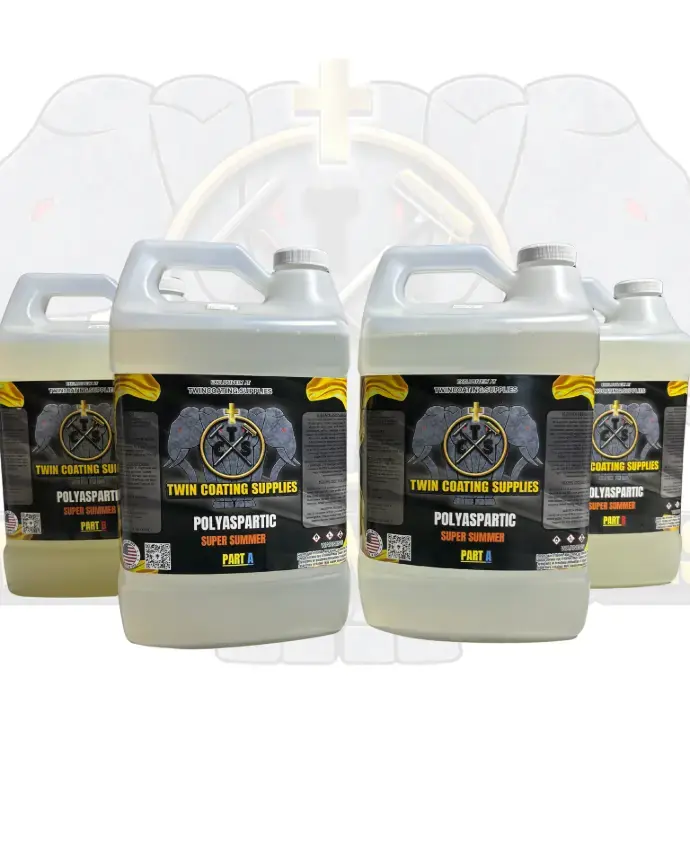
TCS Polyaspartic - 2 Gallon Kit
85 percent solids clear polyaspartic with 125 percent elongation, usable as a flake base coat or a UV stable topcoat.
$178.00
SKU 1412
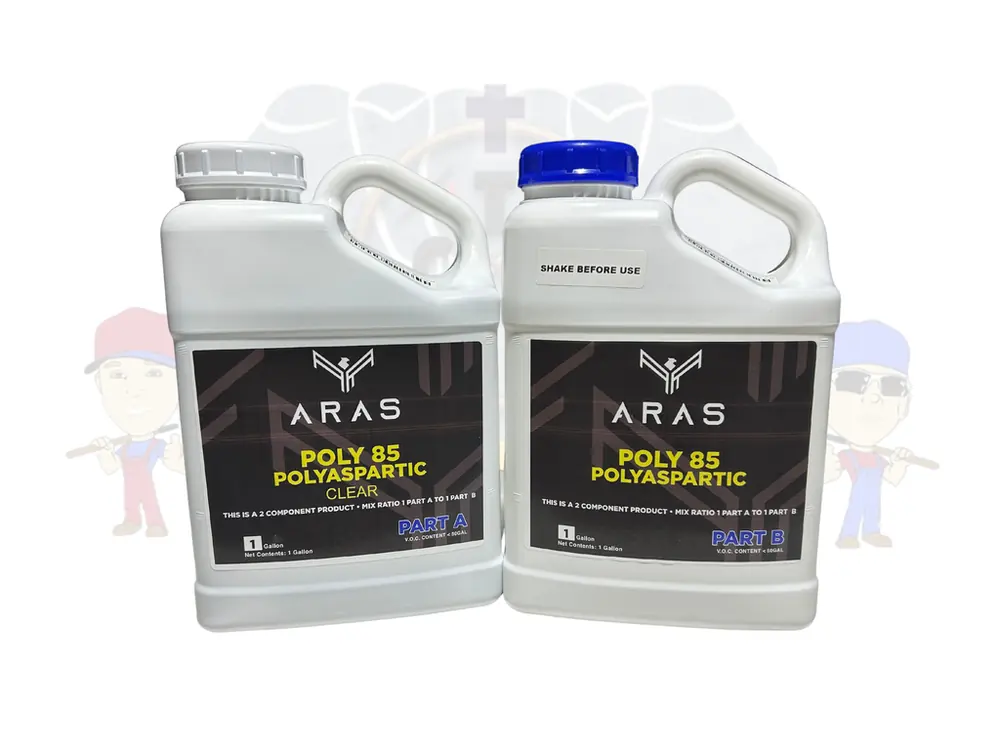
Aras Polyaspartic 85% Solids Kit
Slow cure 85 percent solids polyaspartic clear topcoat with 45 minutes of working time, sold as a 2 gallon 1:1 kit.
$174.00
SKU 1639
Pot life, temperature and why polyaspartic crews work in sections
Polyaspartic earns its place with two properties. It holds color under UV, which epoxy does not, and it cures fast enough that a crew can grind, coat and return a residential garage on a very compressed schedule. That is why it is the standard clear over a flake floor and why one-day garage systems are built around it.
The cost is working time. Polyaspartic pot life is short, and it is temperature sensitive in both directions. A warm slab in July can cut the window well below what the same product gives you in a cool shop. Crews that get into trouble on polyaspartic are almost always mixing too much at once, or trying to hold a wet edge across too wide a section with too few people. Mix small, work in defined sections, and keep someone cutting in ahead of the roller.
Recoat windows matter as much as pot life. Fast chemistry means the window to bond the next coat chemically closes quickly. Miss it and the next coat needs a mechanical abrade to bond, which on a finished clear means sanding a floor you just made glossy.
Polyaspartic is also where flake floors get finished. It locks the broadcast in, and it is where an anti-slip additive is normally carried, since the last coat is the one your feet touch. Decide on slip resistance before the final coat is mixed, not after.
What to check before you order
- Check the pot life against your slab temperature on install day, not the temperature in the catalog
- Match section size and crew size to that pot life before mixing the first batch
- Confirm the recoat window, since a missed window on a fast coating means abrading a finished floor
- Verify compatibility with the base coat underneath, particularly over an epoxy or a moisture vapor barrier
- Decide on anti-slip additive before mixing, because it is carried in the final coat
- Confirm whether the product is sold as a clear topcoat or a pigmented body coat
Polyaspartic: common questions
What is polyaspartic coating used for on concrete floors?
Polyaspartic is used on concrete as a fast curing, UV stable coating, most often as the clear topcoat over a flake or metallic floor and as the finish layer of one-day garage systems. It holds color in daylight and returns the floor to service far sooner than epoxy.
How long is the pot life of polyaspartic?
Polyaspartic has a short pot life compared with epoxy, and it shortens further as temperature rises. Follow the working time on the data sheet for the specific product, mix small batches, and plan the floor in sections so the crew can keep a wet edge from start to finish.
Can polyaspartic be applied directly to bare concrete?
Some polyaspartic products are formulated to go directly onto properly prepared bare concrete as a primer or basecoat, and others are topcoat-only formulas meant to go over epoxy. Check the specific product's role in the system, and prepare the slab mechanically either way.
Is polyaspartic better than epoxy for a garage floor?
Polyaspartic is better as the top layer of a garage floor because it resists UV ambering and returns to service quickly, while epoxy is usually better underneath because it builds film and gives the working time needed to broadcast flake. Most durable garage floors use both.
Can polyaspartic be installed in cold weather?
Polyaspartic can be installed at lower temperatures than many resins, but cold slows the cure and cold slabs can hold moisture that interferes with the film. Check the minimum application temperature on the data sheet, measure the slab rather than the air, and allow extra time before traffic.