

1 products, shipped nationwide
Polyurea
Polyurea coatings for concrete floors, used as fast setting base coats and flake broadcast layers in one-day garage and shop systems. Bought by contractors who need adhesion and flexibility with a very short return to service.
Polyurea
1 product · $177.00 to $177.00
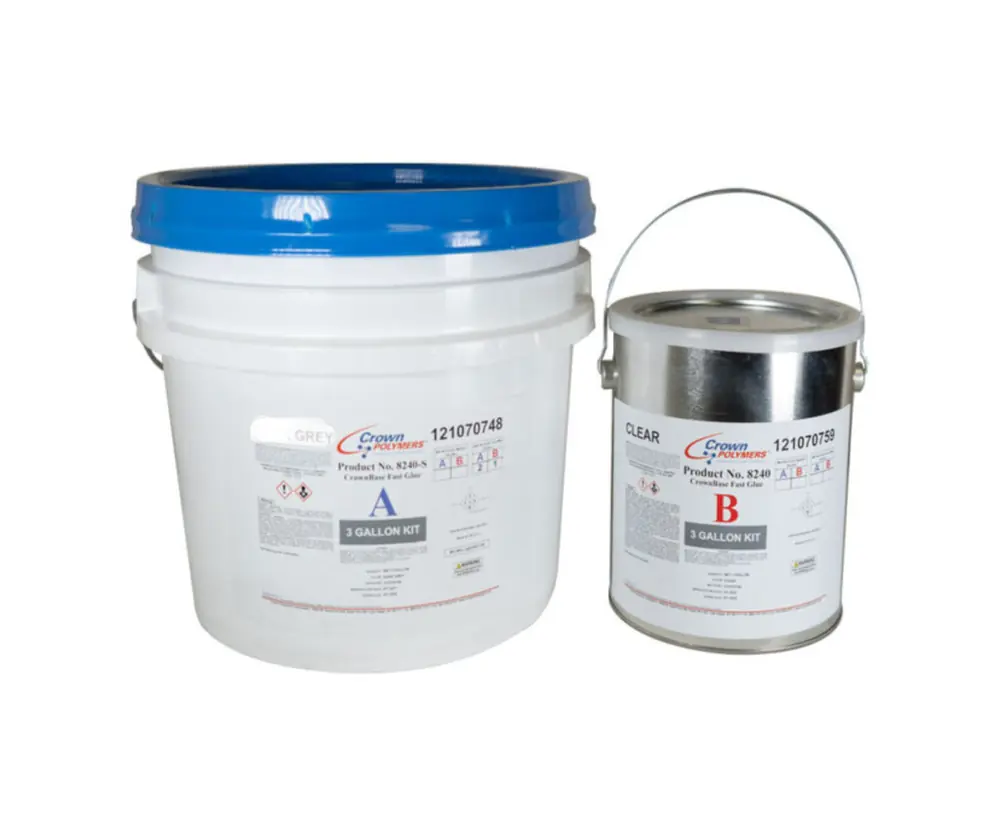
Crown Polymers 8240 Kit
97 percent solids polyurea primer and base coat with low viscosity and low odor, sold as a 3 gallon kit.
$177.00
SKU 1620
Where polyurea fits in a floor system
Polyurea is the fast, flexible member of the family. It bonds aggressively to prepared concrete, it stays flexible enough to ride out slab movement better than a rigid epoxy, and it sets quickly. In a floor system it is most often the base coat, with a polyaspartic clear over the top, which is the standard build for a one-day garage.
The flexibility is the real argument for polyurea over epoxy on a slab that moves, cracks or lives outdoors in a freeze and thaw climate. A rigid film over a moving slab telegraphs the movement. A more flexible film has a better chance of staying together over it.
Speed is the constraint. A fast set means a short pot life and a short window to broadcast flake into the wet coat. Crews run polyurea in sections with a dedicated person on flake, because once it starts to gel the broadcast will sit on the surface instead of keying into the film.
Surface preparation does not get easier because the chemistry is aggressive. Grind the slab, deal with moisture first if the slab tests high, and confirm that the topcoat you plan to use is compatible with the polyurea underneath it.
What to check before you order
- Confirm whether the product is a base coat, a topcoat or both within its system
- Check the pot life and the flake broadcast window, since both are short on fast set chemistry
- Verify the topcoat you plan to use is approved over polyurea
- Check the moisture test result on the slab before ordering, and plan a vapor barrier if it reads high
- Confirm the mix ratio and whether the kit must be mixed as a full unit
Polyurea: common questions
What is the difference between polyurea and polyaspartic?
Polyaspartic is a subset of polyurea chemistry formulated to cure more slowly and stay clear and UV stable, which makes it the usual topcoat. Straight polyurea sets faster and stays more flexible, which makes it a common base coat under a polyaspartic clear.
Can polyurea be used as a garage floor base coat?
Polyurea is widely used as the base coat of a garage floor system, applied to a mechanically prepared slab and broadcast with flake while still wet. A UV stable polyaspartic clear is then applied over it, which is the standard build for a one-day garage floor.
Is polyurea more flexible than epoxy?
Polyurea films stay more flexible than rigid epoxy films, which helps on slabs that move seasonally or crack, and in exterior freeze and thaw conditions. Epoxy builds thicker and gives more working time, so many systems use epoxy indoors and polyurea where movement is a concern.
How fast does polyurea coating cure?
Polyurea sets fast, which is the point of using it, and the working window for rolling and broadcasting flake is short as a result. Follow the pot life and recoat times on the data sheet, mix small batches, and stage the crew in sections so nobody is chasing a gelled edge.