
1 products, shipped nationwide
Generators
Portable generators for powering concrete grinders, dust extractors and job site tools where the available service cannot carry the load. Bought by coating contractors working residential and remote sites.
Generators
1 product · $3,299.00 to $3,299.00
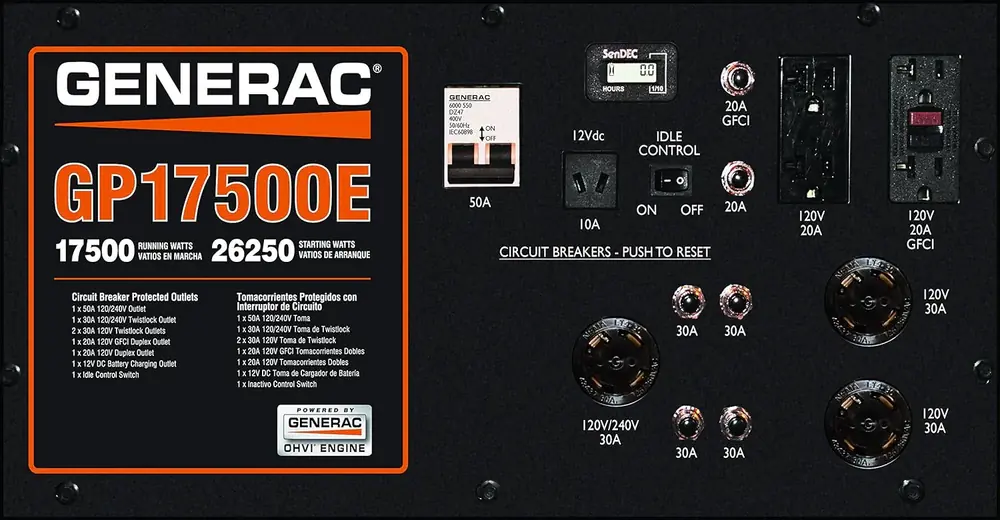
Generac Generator GP17500E
Generac GP Series GP17500E portable generator, sized for commercial and residential job site power on concrete prep and coating work.
$3,299.00
SKU 1551
Sizing a generator to a grinder and an extractor together
A generator becomes necessary the moment the site cannot deliver the electricity the job needs. That is more common than people expect on residential work, since a grinder and a dust extractor running at once will exceed what a typical house circuit provides, and tripping breakers all morning is not a workaround.
Size by the total running load of everything that runs at the same time, then add headroom for startup surge. Motors draw substantially more current on startup than while running, so a generator sized exactly to the running loads will stall when the grinder kicks on with the extractor already going. The extractor is the load people forget, because it runs continuously the entire time the grinder does.
Voltage and receptacle configuration matter as much as total output. A machine that needs 240 volts needs a generator that supplies 240 volts through a matching receptacle, and the adapter or cord set is part of the purchase rather than an afterthought. Check the plug configuration on both ends before the job.
Cord runs cost you voltage. Long undersized extension cords cause voltage drop, and voltage drop makes motors run hot and work poorly. Use the shortest run of properly sized cord you can, and place the generator so that is possible.
Generators are engines. They need fuel on site, they exhaust carbon monoxide so they stay outdoors and away from openings, and they need cool-down before refueling. Plan the fuel quantity for a full grinding day rather than running out at two in the afternoon.
What to check before you order
- Total the running load of every tool that runs simultaneously, then add headroom for motor startup surge
- Confirm the voltage and receptacle configuration match your grinder and extractor plugs
- Include the correct cord set or adapter in the order rather than sourcing it on job day
- Size extension cords for the run length so voltage drop does not overheat motors
- Plan fuel quantity for a full grinding day, and plan outdoor placement away from building openings
Generators: common questions
What size generator do I need for a concrete grinder?
Size a generator by adding the running loads of every tool that runs at once, typically the grinder plus the dust extractor, then adding headroom for the surge that motors draw at startup. Sizing to the grinder alone leaves the generator stalling when the extractor is already running.
Can a generator run a grinder and a vacuum at the same time?
A generator can run a concrete grinder and a dust extractor together if its continuous output covers both running loads with margin for startup surge, and if it supplies the right voltage through the right receptacles. Both machines run simultaneously for the entire grinding session, so both must be counted.
Why do breakers trip when grinding in a residential garage?
Breakers trip in residential garages because a concrete grinder and a dust extractor together draw more current than a typical household circuit supplies. Splitting the machines across separate circuits sometimes helps, but on many houses the practical answer is a properly sized portable generator.
Where should a generator be placed on a job site?
Portable generators must run outdoors, well away from doors, windows and air intakes, because they exhaust carbon monoxide. Place the generator so the cord run to the tools stays short, since long undersized cords cause voltage drop that makes grinder and extractor motors run hot.