
4 products, shipped nationwide
Overlay Products
Cementitious concrete overlays and resurfacing mixes for renewing worn slabs, including thin overlays, traffic rated mixes and decorative overlays with color packs. Used by decorative concrete contractors resurfacing driveways, patios and interior floors.
Overlay Products
4 products · $5.60 to $61.33
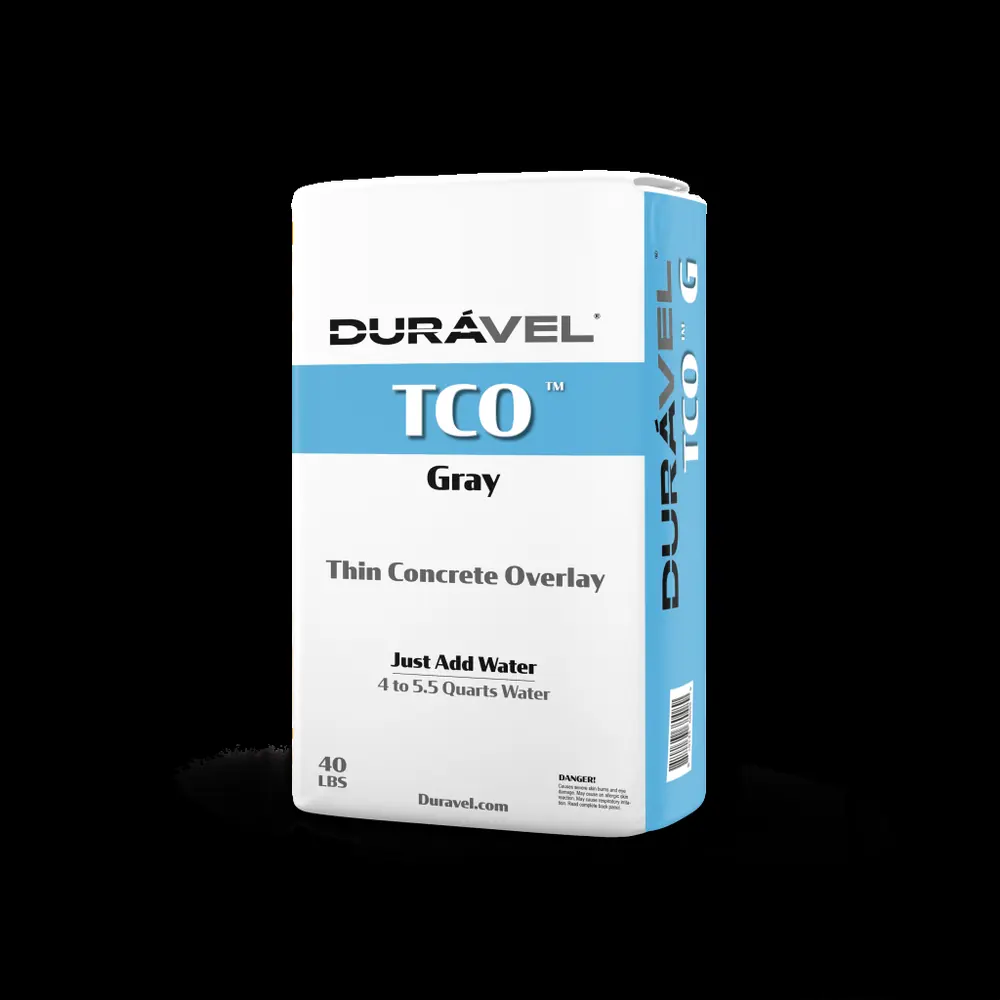
Duravel TCO™ - Thin Concrete Overlay Gray
Flexible thin concrete overlay in gray, 40 lb bags, that renews worn concrete with a smooth microcement finish or custom texture.
$61.33
SKU 1707
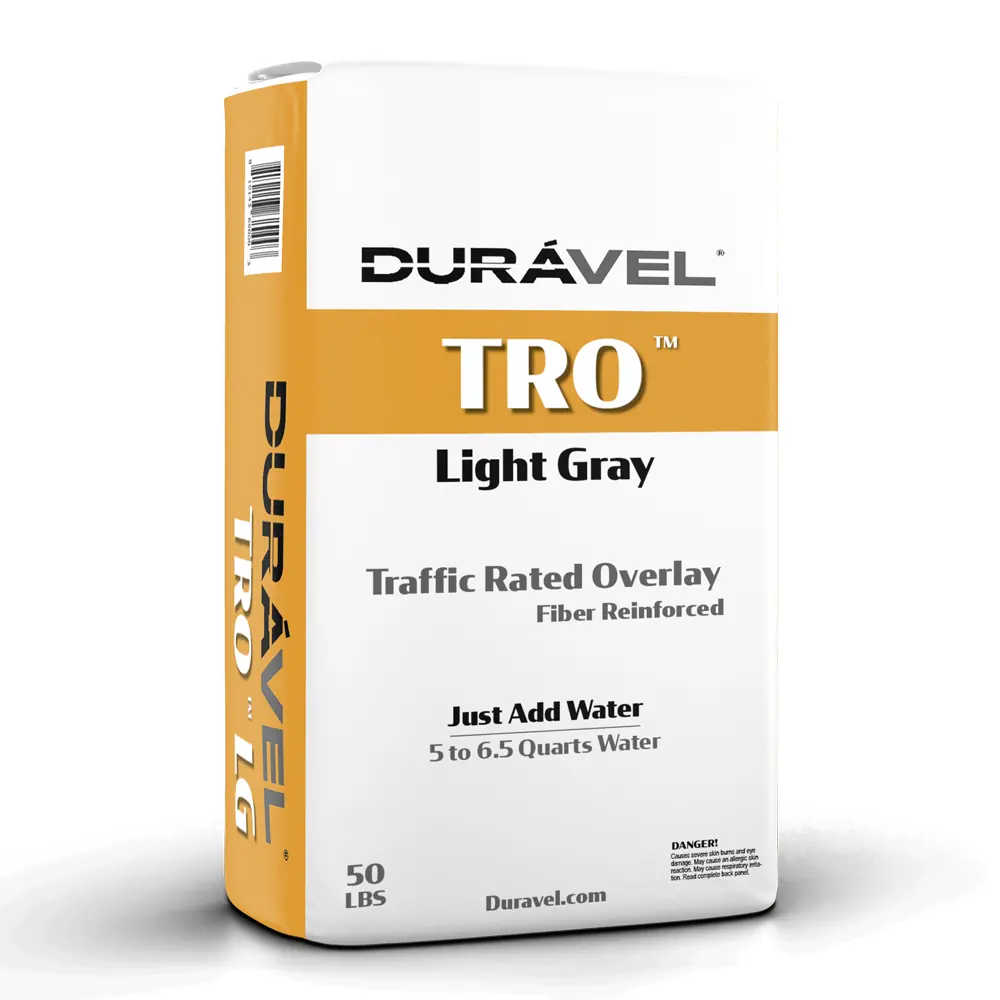
Duravel TRO™ Traffic Rated Concrete Overlay Mix
Fiber-reinforced traffic-rated cement overlay that cures over 4,500 PSI and stands up to residential, commercial and forklift traffic.
$53.00
SKU 1708

Duravel TSO™ Decorative Concrete Overlay
Heavy-duty self-bonding decorative cement overlay, add water only, integrally colorable and textured with standard tools.
$51.99
SKU 1709
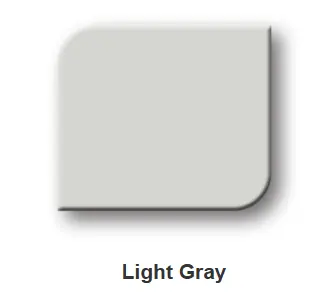
Duravel Overlay Color Pack
Integral color pack added to Duravel cementitious overlay mixes so color runs through the material rather than sitting on top.
$5.60
SKU 1705
Thin, traffic rated or decorative, and the bond underneath
An overlay puts a new surface on an old slab. It is chosen instead of demolition and repour because it costs less and takes less time, and it works as long as the slab underneath is sound.
The products divide by thickness and duty. A thin overlay skims the existing surface for cosmetic renewal, which suits a slab that is ugly but structurally fine. A traffic rated overlay is formulated for the loads a driveway or a vehicle area puts on it, which is a different formulation, not just a thicker application of the same thing. A decorative overlay is built to be stamped, textured, troweled or colored, so working time and workability matter as much as strength.
Everything depends on bond. Overlays go over mechanically prepared concrete, which in practice means grinding or shot blasting to open the surface, then cleaning off every trace of dust. Contamination, curing compound and old sealer all have to come off. A bonding agent or slurry coat is commonly part of the system, and skipping it is how an overlay delaminates in sheets a season later.
An overlay does not fix a structural problem. Cracks that are moving will come through the overlay, and a slab that is heaving or settling will keep doing so. Diagnose and address the cause first, and treat existing joints as joints through the new surface rather than covering them.
Mix and placement discipline matters here more than on coatings, because these are cementitious materials. Water ratio, mixing time and working time all change the result, and adding water to extend workability weakens the finished surface. Color packs are added at mixing, so the whole job should be batched consistently to avoid shade differences between batches.
What to check before you order
- Confirm the slab is structurally sound and not actively moving before specifying an overlay
- Match the product to the duty: thin cosmetic, traffic rated for vehicles, or decorative for stamping and texture
- Plan mechanical preparation and a bonding agent or slurry coat into the scope
- Honor existing control joints through the new surface rather than covering them
- Batch color packs consistently across the job, since mixing variation shows as shade differences
- Check the working time against the placement area and crew size before mixing
Overlay Products: common questions
What is a concrete overlay?
A concrete overlay is a cementitious material applied over an existing slab to create a new wearing surface, used instead of demolishing and repouring. Overlays range from thin cosmetic skim coats to traffic rated mixes for driveways and decorative versions built to be stamped, textured or colored.
How thick can a concrete overlay be applied?
Overlay thickness is set by the specific product, since thin resurfacers, traffic rated mixes and decorative overlays are each formulated for a defined range. Applying a thin overlay thicker than intended, or a heavy mix thinner, causes cracking and bond problems, so follow the manufacturer's stated thickness.
Will cracks come through a concrete overlay?
Cracks that are still moving will reflect through a concrete overlay, because an overlay is a surface layer rather than a structural repair. Static cracks can be repaired and overlaid successfully, but a moving crack, a settling slab or a heaving slab needs the underlying cause addressed first.
Does concrete need to be ground before an overlay?
Yes. Concrete must be mechanically prepared before an overlay, normally by grinding or shot blasting, then cleaned of all dust and contamination. Overlays depend entirely on bond to the existing slab, and a bonding agent or slurry coat is commonly part of the system as well.